Why Rankings Matter Less in AI Overviews
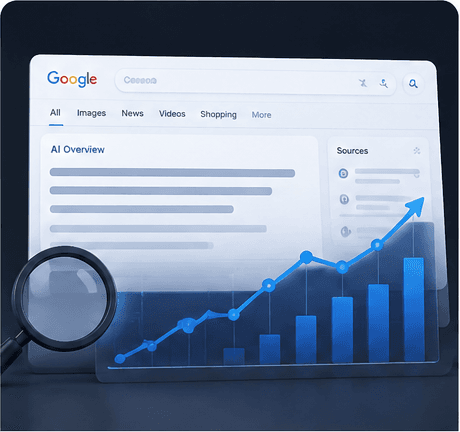
Ranking first and being cited in an AI Overview are two different selections. Here is what actually decides the second one, and how to measure visibility when position no longer predicts traffic.
AI Search

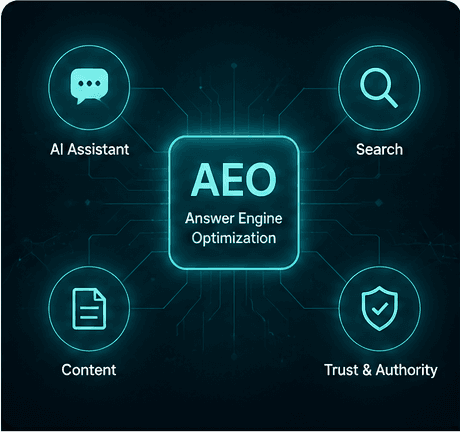
Answer engine optimization is the work of making a page easy to quote as a direct answer: a question-shaped heading, the answer in the first sentence beneath it, and structured data that removes any guesswork about what the page is. It is not a separate discipline from SEO — it is SEO written for a reader who only wants the answer.
For most of search history, the job was to earn a position and then earn the click. That model assumed the searcher would visit a page to get their answer. Increasingly they do not: a summary panel or an assistant answers first, and the source is credited in a line of small text, if at all.
Answer engine optimization is the response to that shift. The goal moves from ranking a page to being the passage a system chooses to quote.
Less than people expect. The structural habits that make content quotable are the same ones that make it readable.
Keyword stuffing did not work before and does not work now. Nor does producing volume: an assistant summarising a topic has no incentive to quote the twentieth restatement of the same point.
The underlying requirement is unchanged. You need to be genuinely useful on a subject you can speak to credibly, and you need the technical foundations that let a machine read the page at all.
This is the uncomfortable part. There is no console reporting how often an assistant cited you. What you can do is define the questions that matter to your buyers, sample the answers assistants give for them on a schedule, and record whether you appear.
It is manual and imprecise, and it is still better than assuming. Pair it with the metrics you already trust — non-brand impressions, branded search volume, direct traffic — and treat movement across all of them as the signal.
Take the ten questions your sales team answers most often. Check whether each has a page, whether that page answers the question in the first paragraph, and whether the heading matches how it is asked. Most businesses find gaps in all three within an hour.
Written by the CodeActivator Team. We publish what we learn running search, development, paid media and social work for clients and agency partners.
Related questions
Keep reading

Ranking first and being cited in an AI Overview are two different selections. Here is what actually decides the second one, and how to measure visibility when position no longer predicts traffic.

The handful of fixes that move Core Web Vitals on real sites, in the order we work through them during a speed audit.

Double-counted submissions and mismatched attribution windows make campaigns look better or worse than they are. How to find both.
Tell us what you are trying to improve and we will tell you what we would do first.