
AI Search
What Answer Engine Optimization Actually Means for Your Business
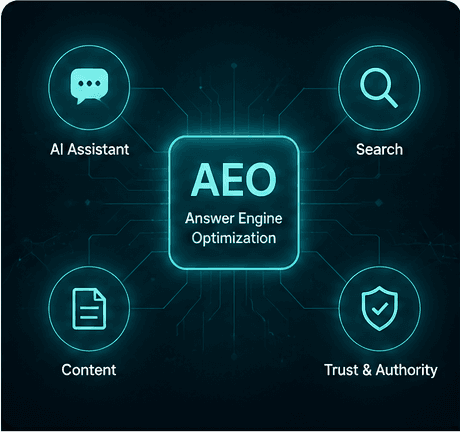
AEO is about being the source an assistant quotes, not about a new set of keywords. Here is what changes in practice, and what does not.
Read Article
AI Search
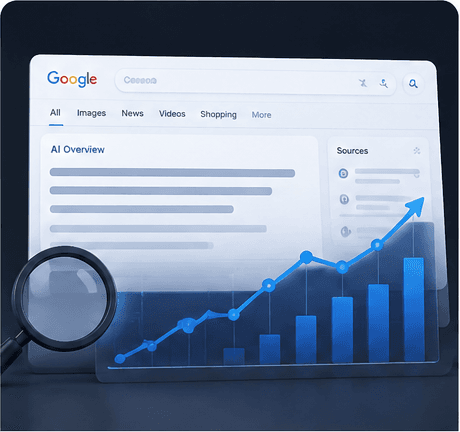
Rankings still matter, but a ranking position no longer predicts visibility. When Google shows an AI Overview, the panel answers the query directly and cites a small set of supporting pages, and those citations are selected passage by passage rather than strictly in rank order. A page ranking third can be quoted while the page ranking first is not. The practical shift is to optimise for being the clearest quotable answer to a specific question, and to measure organic clicks, branded search and assisted conversions instead of average position alone.
For twenty years the model of search engine optimization was stable: earn a position on the results page, then earn the click. Position and traffic moved together closely enough that average position worked as a proxy for visibility. Rank higher, get more clicks, get more enquiries.
AI Overviews break the second half of that chain. Google now composes an answer at the top of the search engine results page for a growing share of informational queries, drawing on multiple sources and linking to them. The panel evolved from what Google originally launched as Search Generative Experience, and it sits above the traditional blue links that SEO has always competed for.
The result is that the position you occupy and the visibility you actually receive have come apart. You can hold the top organic position on a query and still watch the click-through rate fall, because the searcher got a sufficient answer before reaching your listing. You can also be cited inside the panel while ranking well below the first position, and see referral traffic that your rank tracker cannot explain.
This is the point most reporting misses. Ranking is a judgement about which pages best satisfy a query overall. Citation inside an AI Overview is a judgement about which passages best support a specific statement the model is composing. These are related but separate decisions, made at different levels of granularity.
A comprehensive guide can rank first because it covers a topic thoroughly, while a shorter page that answers one sub-question in a single clean sentence is the more quotable source for that sentence. Depth wins the ranking; clarity wins the citation. Both matter, but they reward different things, and a page optimised only for the first can lose the second.
Google has been consistent that there is no separate submission process, no markup and no paid placement that gets a page into an AI Overview. Eligibility follows from ordinary indexing: the page has to be crawlable, indexable and permitted to show a snippet. Publishers who use the nosnippet or max-snippet robots directives, or the data-nosnippet attribute, restrict the text Google may display, which also restricts what can be used in the panel. That is the only real lever, and it works by exclusion rather than inclusion.
Google Search Console does not report AI Overview impressions and clicks as their own dimension. Appearances within the panel are folded into the standard performance report alongside conventional web results, which means you cannot cleanly separate the two in the interface you already trust.
This produces a specific and confusing pattern. Impressions hold steady or rise. Average position looks healthy, sometimes better than before. Clicks fall. Nothing in the report explains the gap, and the instinctive response is to chase the ranking that already looks fine.
The same disconnect appears outside Google. ChatGPT search, Perplexity and Microsoft Copilot all compose answers over retrieved sources, and none of them report to your analytics the way a search engine referral does. Traffic that arrives after someone read about you in a generated answer usually shows up as direct or branded search, well after the interaction that caused it.
It would be a mistake to read any of this as the end of SEO. AI Overviews draw on the same index, and the retrieval that feeds them favours pages the search engine already considers relevant and trustworthy for the topic. Ranking well remains the most reliable route into the candidate set.
Rankings also still convert directly on the queries that matter most commercially. Transactional and navigational searches — someone looking for a supplier, a price, a location or a specific brand — are far less likely to be resolved by a generated summary, because the searcher wants to reach a business rather than learn a fact. Informational queries at the top of the funnel are where the panel intercepts most traffic.
So the honest framing is not that rankings stopped mattering. It is that ranking is now a necessary condition rather than a sufficient one, and that it predicts traffic much less reliably than it used to on one specific class of query.
The work that improves citation odds is unglamorous and largely overlaps with writing well.
If average position no longer answers the question of whether search is working, replace it with measures that survive the change.
Two overcorrections are worth avoiding. The first is abandoning depth in favour of short answer-shaped pages. Thin content does not rank, and a page that never enters the candidate set cannot be cited from it. Depth earns the position; structure earns the quote; you need both.
The second is treating citation as a controllable placement. No agency can guarantee that a business will appear in an AI Overview or in any assistant's answer, because the selection is made by a system that nobody outside the platform controls and that changes without notice. Anyone offering that guarantee is describing something they cannot deliver.
The realistic goal is to be the clearest, most verifiable source on the questions your buyers actually ask, and to measure whether that is producing enquiries. That was good practice before AI Overviews existed. What has changed is that the reward for doing it well now shows up somewhere other than your average position.
Written by the CodeActivator Team. We publish what we learn running search, development, paid media and social work for clients and agency partners.
Related questions
Keep reading
AEO is about being the source an assistant quotes, not about a new set of keywords. Here is what changes in practice, and what does not.
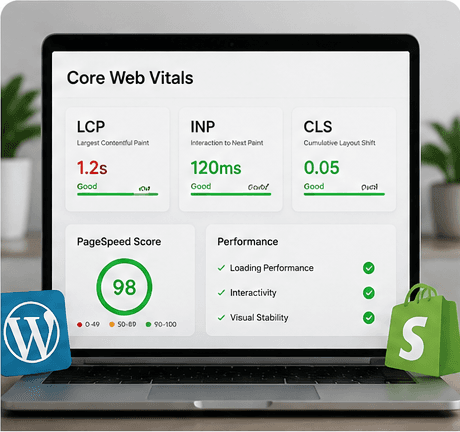
The handful of fixes that move Core Web Vitals on real sites, in the order we work through them during a speed audit.
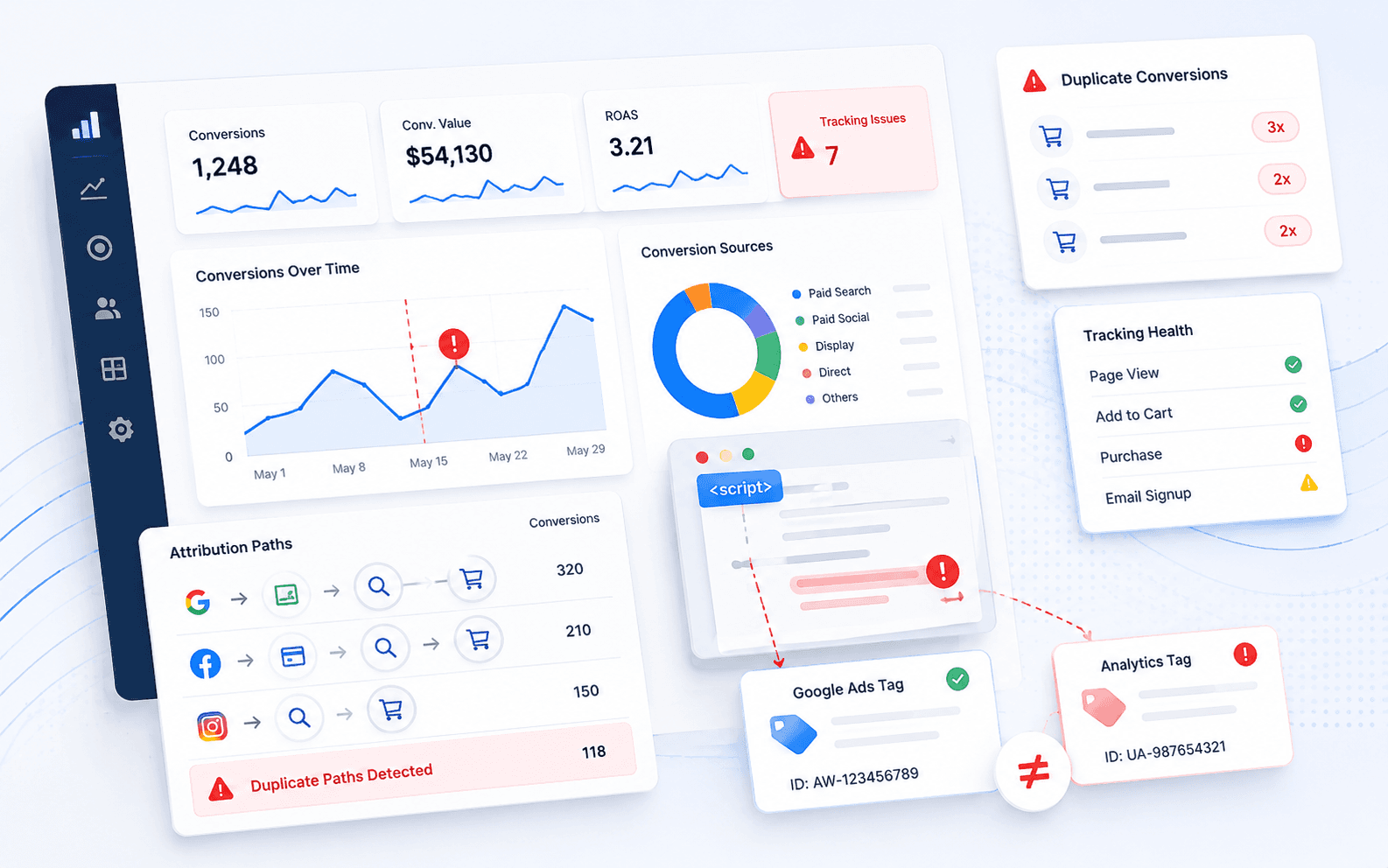
Double-counted submissions and mismatched attribution windows make campaigns look better or worse than they are. How to find both.
Tell us what you are trying to improve and we will tell you what we would do first.